Why We Obsess Over the Parts You Never See
The most important components on a motorcycle are the ones no rider will ever look at. That is exactly why we look so hard.
7 min read
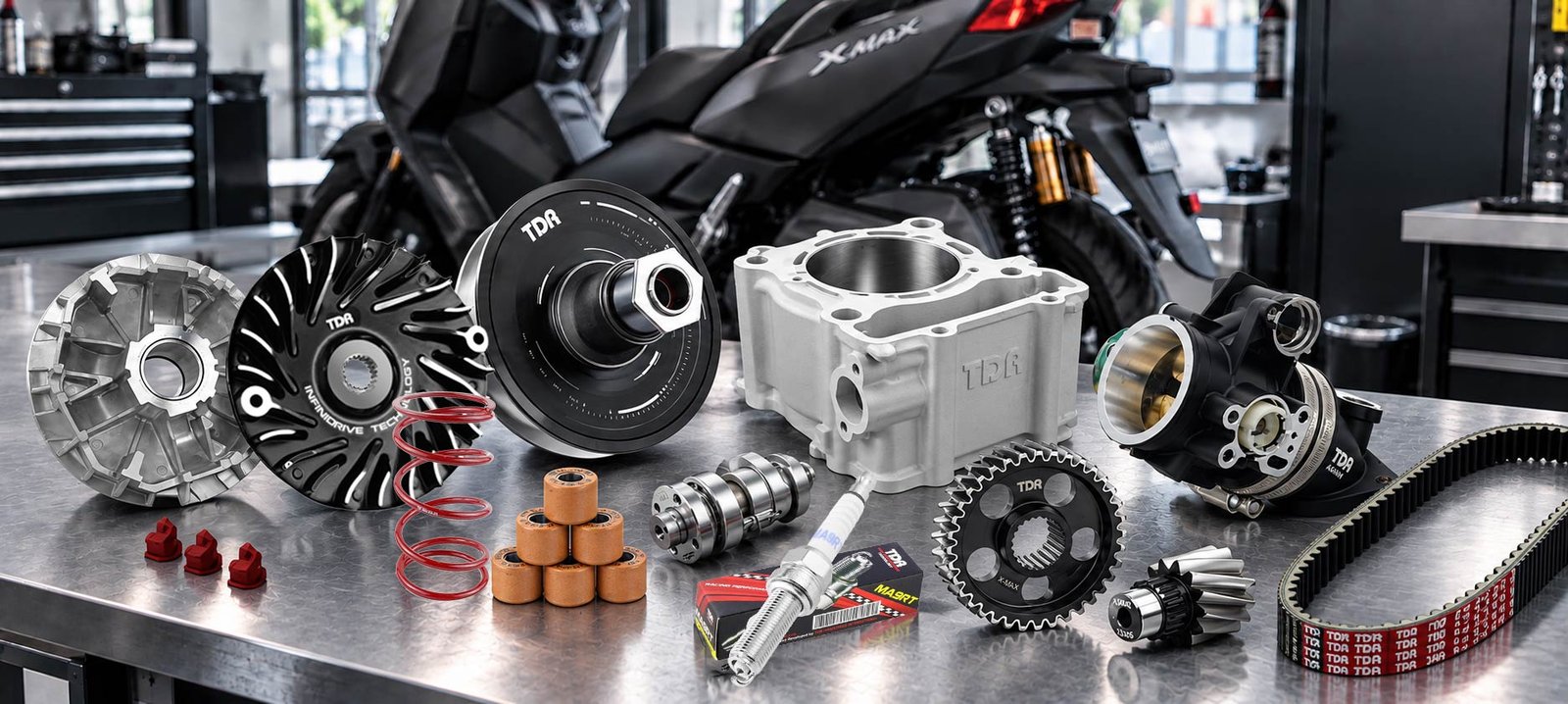
Open the catalogue of any parts company and you will find the heroes near the front: the exhaust with its beautiful weld lines, the machined calliper, the racing bodywork. Parts that photograph well. Parts a rider points to with pride when his friends gather around the machine.
We make some of those. We are proud of them.
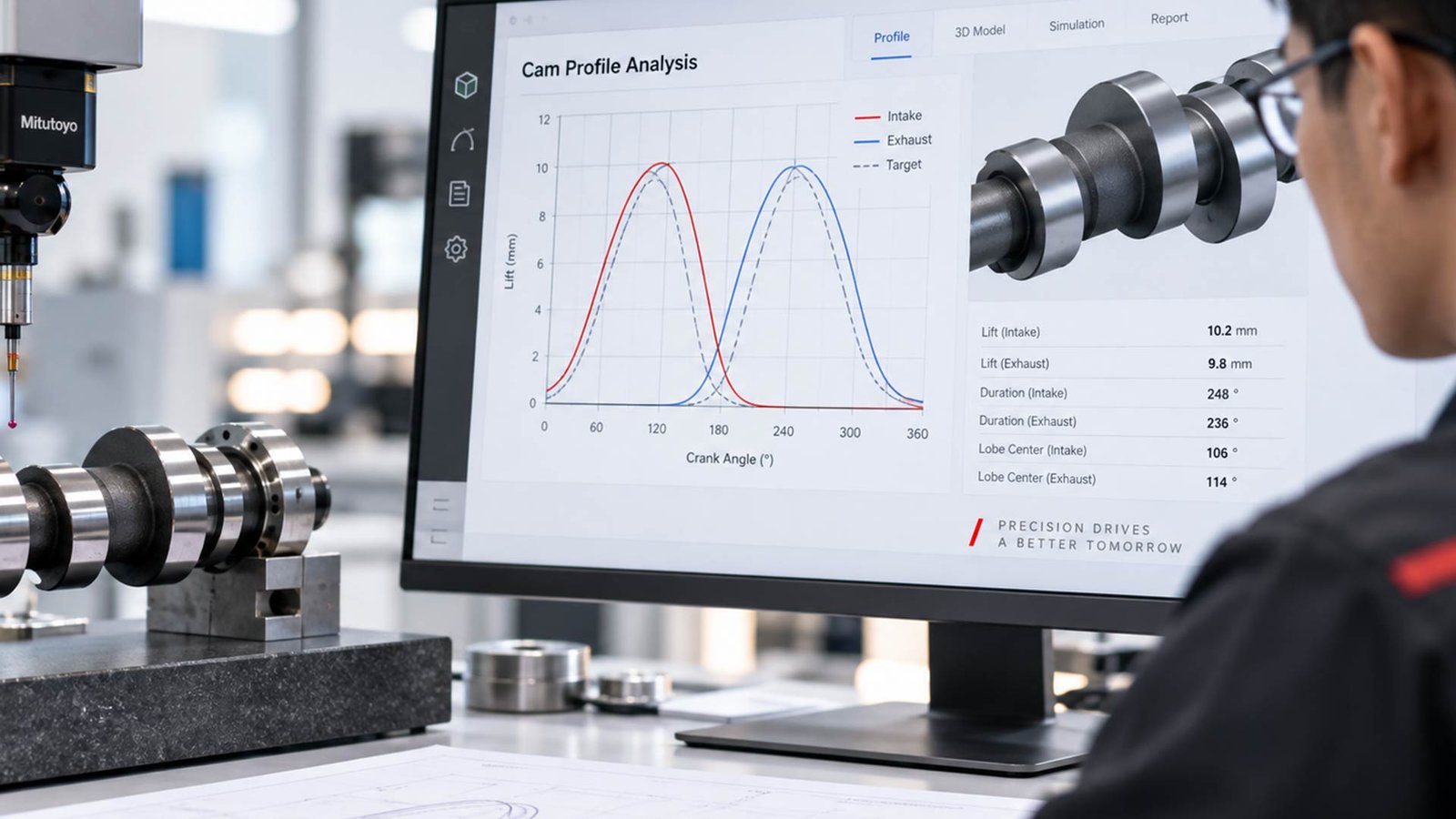
But walk through our engineering discussions and you will find the attention pooled somewhere else entirely — around components most riders could not name and will never see. An oil seal the size of a coin. The roller weights inside a CVT pulley. A valve spring. A bearing race. The cam profile hidden in the darkness of a cylinder head, touched only by oil and metal for its entire working life.
These are the parts that never get photographed. They are also the parts a rider's life quietly depends on. And there is a rule we have learned in decades of doing this work:
A machine is only ever as honest as its most invisible component.
Where trust actually lives
Consider what a scooter in Southeast Asia is actually asked to do. Not the brochure version — the real one. Start on the first press, every morning, for years. Carry two people and a week's shopping through standing traffic in equatorial heat. Idle for twenty minutes in a jam with a delivery box on the back, then hold full throttle on an open ring road, then do it all again tomorrow. Tens of thousands of kilometres, often with maintenance stretched to the edge of the interval, because time in a workshop is income lost.
Now ask: what decides whether that machine keeps its promise?
Not the visible parts. The exhaust does not decide it. The bodywork does not decide it. It is decided by a seal holding its lip geometry at the ten-thousandth heat cycle. By a belt whose cords resist stretch long after a cheaper one has begun to slip. By roller weights wearing evenly instead of flatting, so the transmission still engages the way it did when new. By a valve spring that has not sagged, a bearing that has not pitted, a cam lobe whose hardened surface is still holding the profile the engineer drew.
Trust, in other words, lives in the invisible. A rider cannot inspect any of this. He cannot compare it in a showroom or judge it from packaging. When he buys an internal component, he is buying a pure promise — and the entire moral weight of our engineering rests on whether that promise is kept in a place no one can check.

The tyranny — and dignity — of the last few microns
Here is what obsession means in practice.
Take something as humble as an oil seal. Its working edge meets the shaft in a band of contact fractions of a millimetre wide. Get the lip geometry, the material compound, or the interference fit slightly wrong — amounts invisible to any eye — and nothing happens at first. The part fits. The engine runs. The rider goes home satisfied. The failure arrives months later as a weep of oil, then a starved bearing, then a machine on the side of the road at the worst possible moment, carrying someone who trusted it.
This is the defining cruelty of internal components: their failures are delayed, and their quality is invisible at the moment of sale. A careless maker can ship a part that looks identical to an excellent one, pocket the same price, and be long gone when the difference reveals itself. The market cannot fully police this. Only the maker's conscience can.
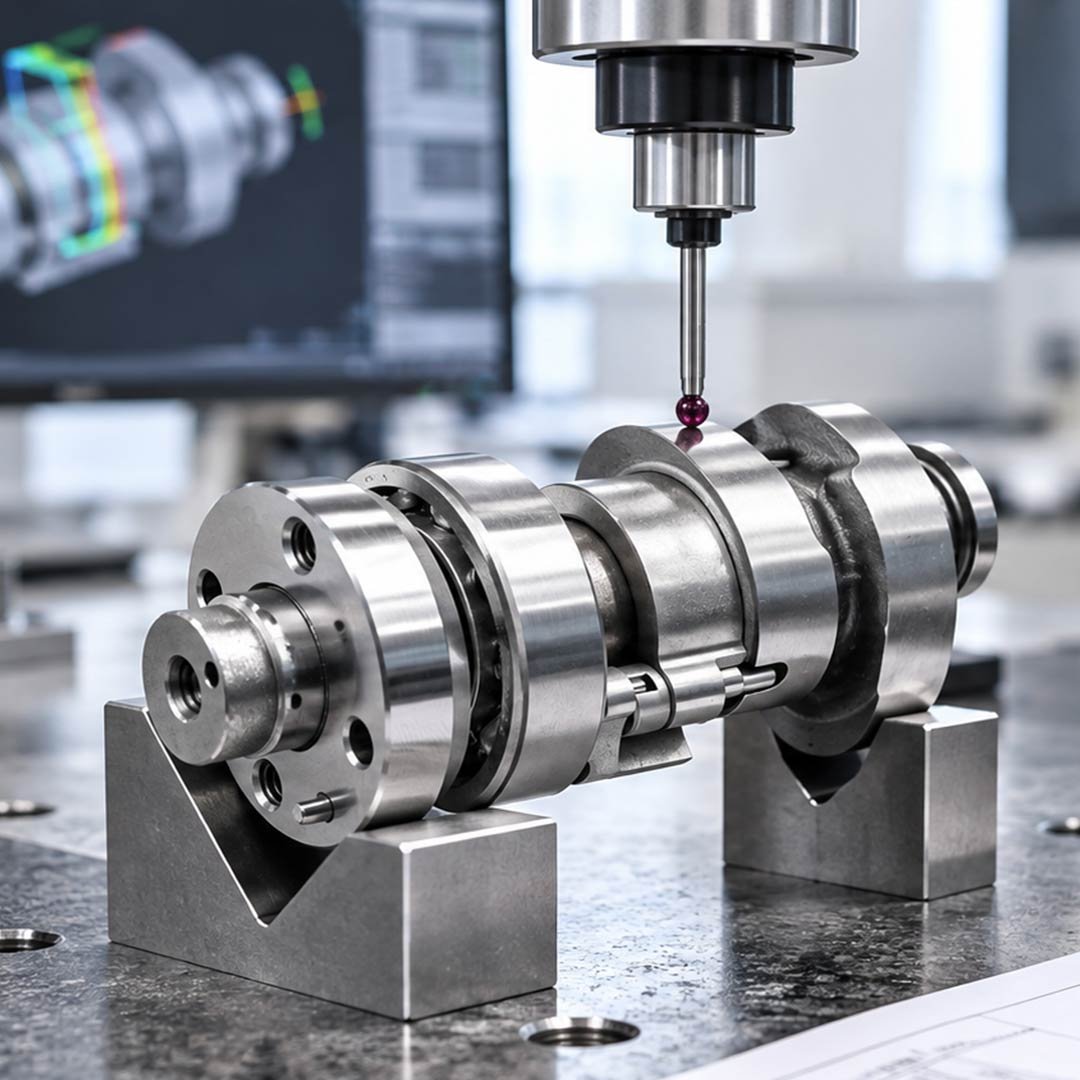
So we police it ourselves, at the level where the truth lives: in material certificates we actually verify rather than file; in the metallurgy of a camshaft's case-hardening, measured, not assumed; in dimensional checks at tolerances far tighter than the eye or the fingertip can resolve; in testing that replicates the heat, load, and neglect of real roads rather than the courtesy of a laboratory. Whole trips are made — factory floors walked, suppliers sat across from, processes watched with our own eyes — for components a customer will never see and would not recognise if he did.
None of this is romantic. Most of it is repetitive. All of it is the actual work. The last few microns are a tyranny, but they are also where this profession keeps its dignity.
Engineering as a promise to a stranger
Why hold an unseen part to a standard no one can verify? Because we know who is on the machine.
Every invisible component we ship ends up underneath someone — a courier whose income is measured in completed deliveries, a father with a child on the pillion seat, a young rider on the first machine he has ever owned and tuned with his own hands. His safety is our engineering, whether he ever thinks about it or not. His livelihood rides on our tolerances. Even his pride — that particular joy of a machine that pulls cleanly and idles true — is built, in the end, out of parts he will never lay eyes on.
This is what connects a cam profile to a human life, and it is why we have never been able to treat internal components as commodities. To us, a part that disappears into an engine is not exempt from excellence because it is hidden. It is bound to excellence because it is hidden — because the person relying on it has no way to protect himself from our shortcuts, and therefore deserves to be protected by our standards.
The heroes at the front of the catalogue will keep getting the photographs. That is fine. They have earned their place.
But if you want to know who we really are — what this company believes when nobody is watching — do not look at the parts we polish for the camera.

Look at the ones we polish anyway.